Any Questions?
Get in touch. Just write us an email.
Planning Your Trip to Bosnia and Herzegovina: Everything You Need to Know
Planning a trip to Bosnia and Herzegovina is easier than you'd expect – and full of things you didn't expect. Questions come up anyway. Here are the answers to the ones we hear most.
Entering Bosnia and Herzegovina
Citizens of Germany, Austria, Switzerland, the USA, most EU countries, Canada, and Australia can enter Bosnia and Herzegovina without a visa. A valid national ID card is sufficient for EU citizens — a passport is not required. The permitted stay is up to 90 days within any 180-day period. One thing worth noting: your ID or passport must still be valid for at least three months beyond your exit date — so check that before you leave.
By car: Border crossings into Croatia, Montenegro, and Serbia are well-established. In peak summer season, Croatian exit points can take a while — relevant if you're catching a ferry or a flight on the other side. EU citizens should also check that their car insurance covers Bosnia and Herzegovina. Most policies do, but it takes two minutes to confirm.
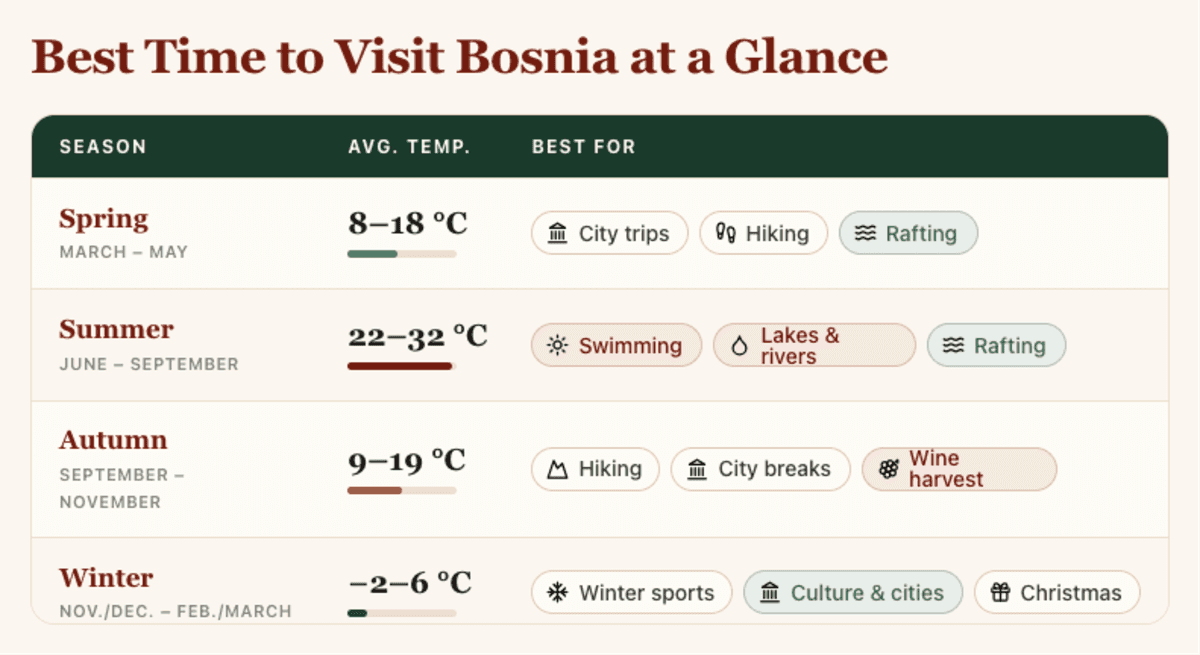
Climate and Best Time to Visit
Bosnia and Herzegovina has two main climate zones — and several sub-climates within them. Six in total. You notice the difference.
In the north and centre of the country, including Sarajevo, the climate is continental: summers up to 35°C, winters with snow and occasionally -20°C. In Herzegovina — Mostar, Trebinje, the Neretva valley — it's Mediterranean: mild winters, dry and hot summers, almost no rain between June and September.
June and September are our personal favourites: everything is either in bloom or turning, temperatures are comfortable, and the groups are smaller.
Currency in Bosnia and Herzegovina
The national currency is the Bosnian Convertible Mark (BAM). The exchange rate is fixed: 1 Euro = 1.95583 BAM — which rounds to a factor of two. Ten euros gets you roughly twenty marks.
Visa and Mastercard work without issue in restaurants, hotels, and larger shops in Sarajevo. American Express is rarely accepted. At the market, at the bakery, on a minibus, or in smaller shops: have cash ready.
Large notes (over 50 BAM) are best broken down at a supermarket or restaurant — kiosks and bus drivers rarely have much change. ATMs are easy to find in Sarajevo and in all larger towns across the country.
Tipping
Ten percent in restaurants is the norm — not obligatory, but a genuine gesture. At the market or the bakery, rounding up is enough. For guides: if the day was good, show it. Your guide would never bring this up, so we will.
Safety
Bosnia and Herzegovina is safe. Not just our assessment — every single guest who has travelled with us says the same. Standard city sense applies as anywhere: don't leave valuables on display, park on a supervised lot. That's it.
One thing that is genuinely worth knowing: in some rural areas away from marked paths, landmines from the 1990s are still present. Marked hiking trails and established routes are safe — just don't go cross-country where no one has been before.
Language
English gets you through Sarajevo and Mostar without difficulty, particularly with anyone under 40. German is understood more often than you'd expect — Bosnia has deep historical ties to Austria, and many families have relatives in the DACH region.
A few words of Bosnian go a long way. Hvala (thank you) or Dobar dan (good day) land with a warmth that's hard to explain until you've tried it.
Mobile Internet and Wi-Fi
Wi-Fi is available in almost every café, hotel, and restaurant. For connectivity on the move, the easiest option is an eSIM — the Airalo eSIM with weekly or monthly data plans is cheap, straightforward, and works wherever there's signal. Alternatively, local prepaid SIM cards are available at the airport, in supermarkets, and at kiosks throughout the country.
Getting Around Bosnia and Herzegovina
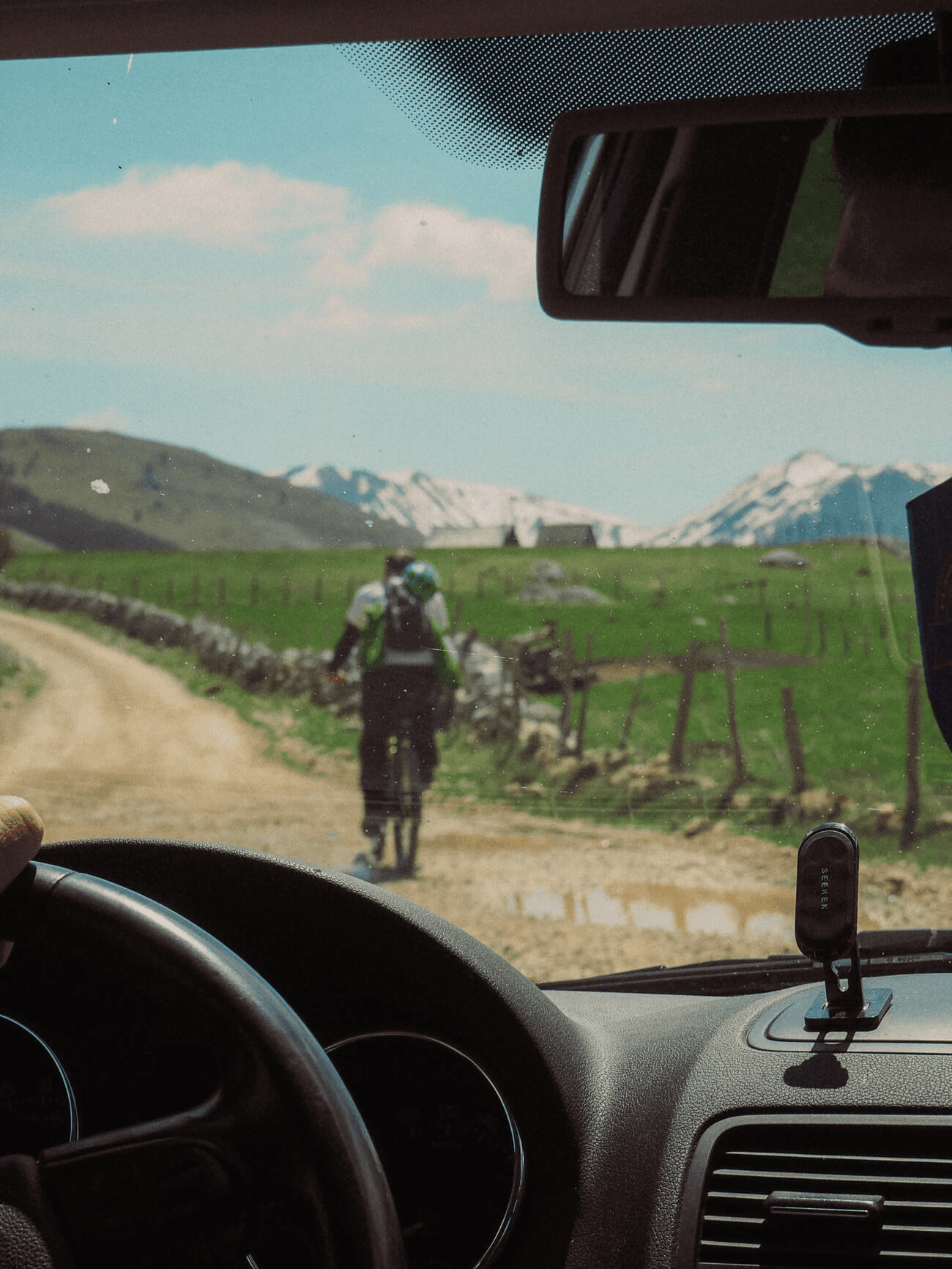
The size of Bosnia and Herzegovina catches people off guard. The country is larger than Switzerland, and routes that look short on Google Maps often take longer than expected once you're on mountain roads with hairpin bends.
By car is the honest recommendation for anyone who wants to see the country properly. Main roads are well-maintained; mountain roads need attention, and in winter additional care. The blood alcohol limit is 0.3‰ and is enforced.
Buses connect all the major cities reliably. Sarajevo to Mostar: around 2.5 hours, roughly 15 BAM. International connections from Vienna, Ljubljana, and Split are possible — though border waiting times make for a long day.
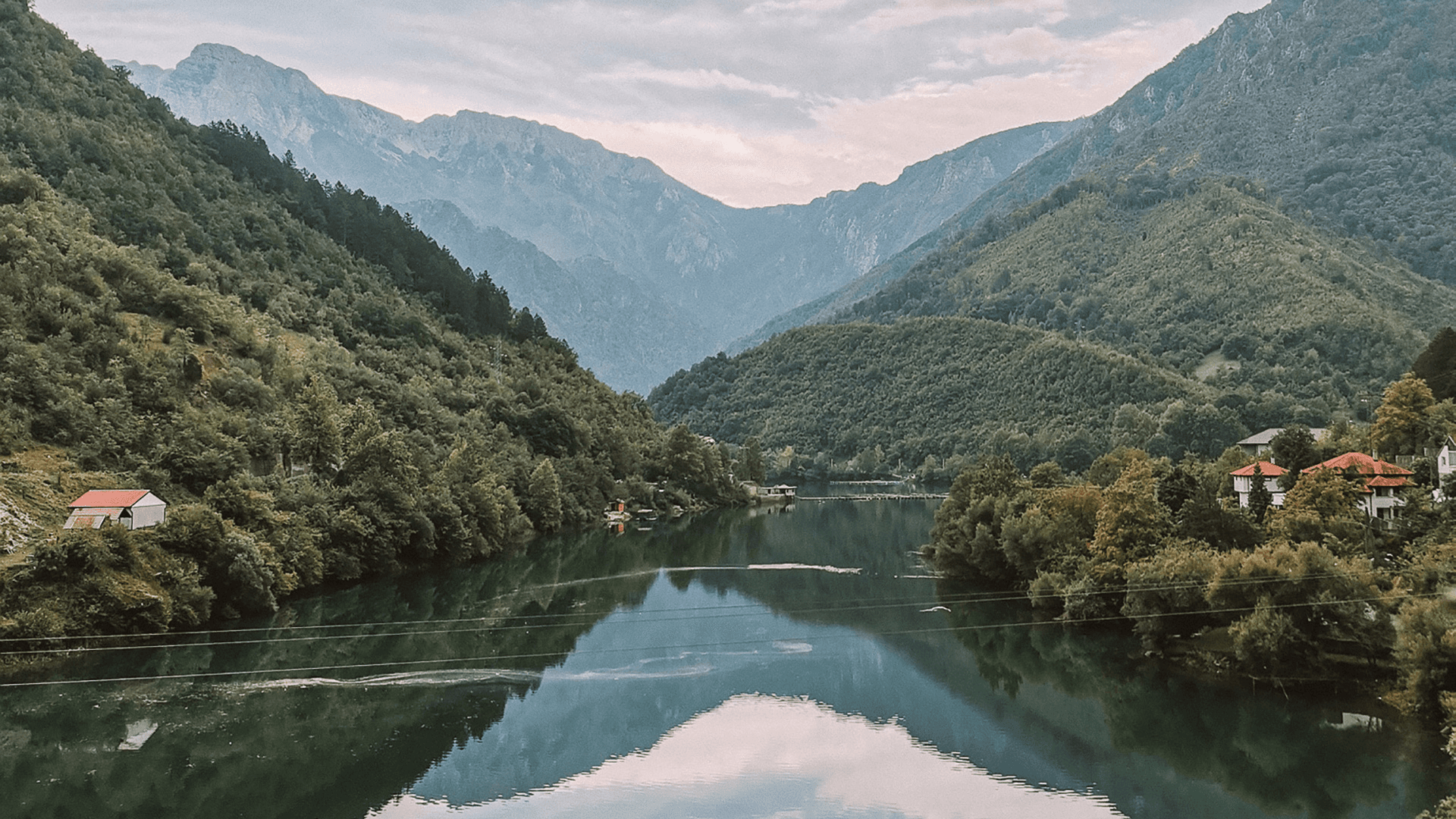
Trains are limited. The one exception worth knowing: the Sarajevo to Mostar route through the Neretva Canyon is one of the most beautiful train journeys in the world. We didn't invent that — Condé Nast Traveler wrote it.
Cheyf Experiences You Might Like
Choose from our Cheyf Signature Experiences for a hassle-free holiday full of beautiful moments, or design a personalized itinerary tailored to your interests.